Search is changing. People no longer rely only on Google results to find information. They are also using AI-powered platforms like ChatGPT, Google AI Overviews, and other answer engines to get quick answers and explore topics. This shift is changing how businesses approach online visibility and content creation.
You may have come across three terms in this changing search landscape: SEO, AEO, and GEO. Understanding GEO vs SEO vs AEO is important because each approach serves a different purpose in how content gets discovered, presented, and recommended across search platforms.
This guide explains what SEO, AEO, and GEO mean, how they differ, and how businesses can use them together to improve search visibility.
How AI Is Transforming the Search Experience
Search behavior is evolving. Instead of relying only on traditional search results, people increasingly use AI-powered platforms to ask questions, explore topics, and receive summarized information. These experiences are changing how users discover websites and how businesses build online visibility.
From Traditional Search Results to AI-Generated Responses
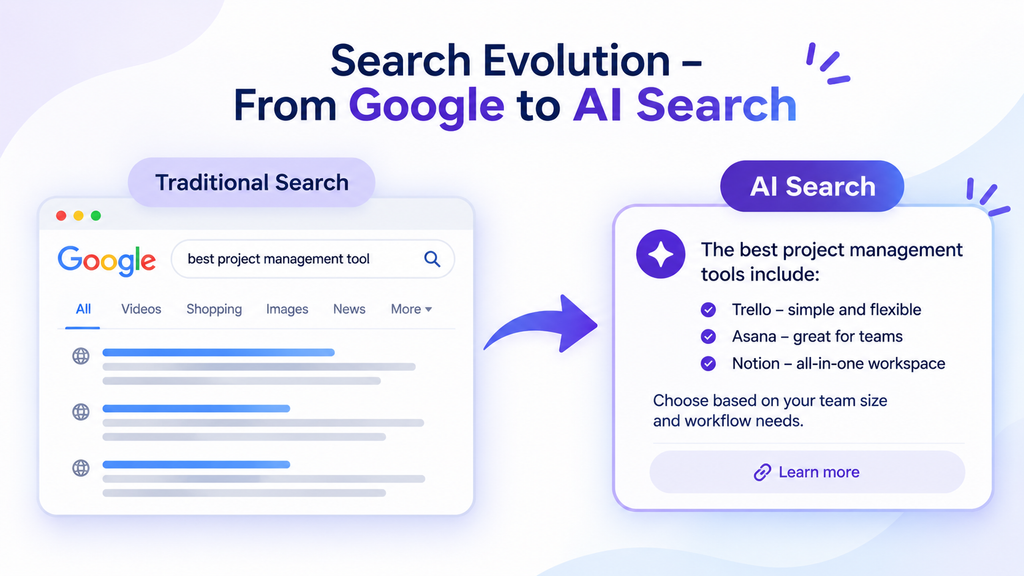
Traditional search engines display a list of web pages related to a user’s search query. Users then visit those pages to find answers, compare information, or explore a topic in more detail.
AI-powered search takes a different approach. It can gather information from multiple sources and present a summarized answer instead of simply showing a list of links. For example, someone searching for “how to improve website SEO” might see several blog posts in traditional search results, while an AI-powered search experience may provide key recommendations along with links to relevant sources.
As a result, businesses need to think beyond search engine rankings. Their content should also provide clear, accurate, and useful information that AI systems can understand and reference.
The Rise of AI-Powered Search Platforms
AI-powered platforms are changing how users find and interact with online information. Tools such as ChatGPT, Google AI Overviews, and Perplexity allow people to ask questions naturally and receive conversational responses rather than searching through multiple web pages.
For businesses, these platforms create additional opportunities to reach audiences. A website may attract visitors through traditional Google results, but its content may also be referenced in an AI-generated answer.
This is why marketers are paying more attention to AI search visibility. Creating helpful content, answering user questions, demonstrating expertise, and building a trustworthy online presence can support visibility across both traditional and AI-powered search experiences.
Understanding GEO vs SEO vs AEO
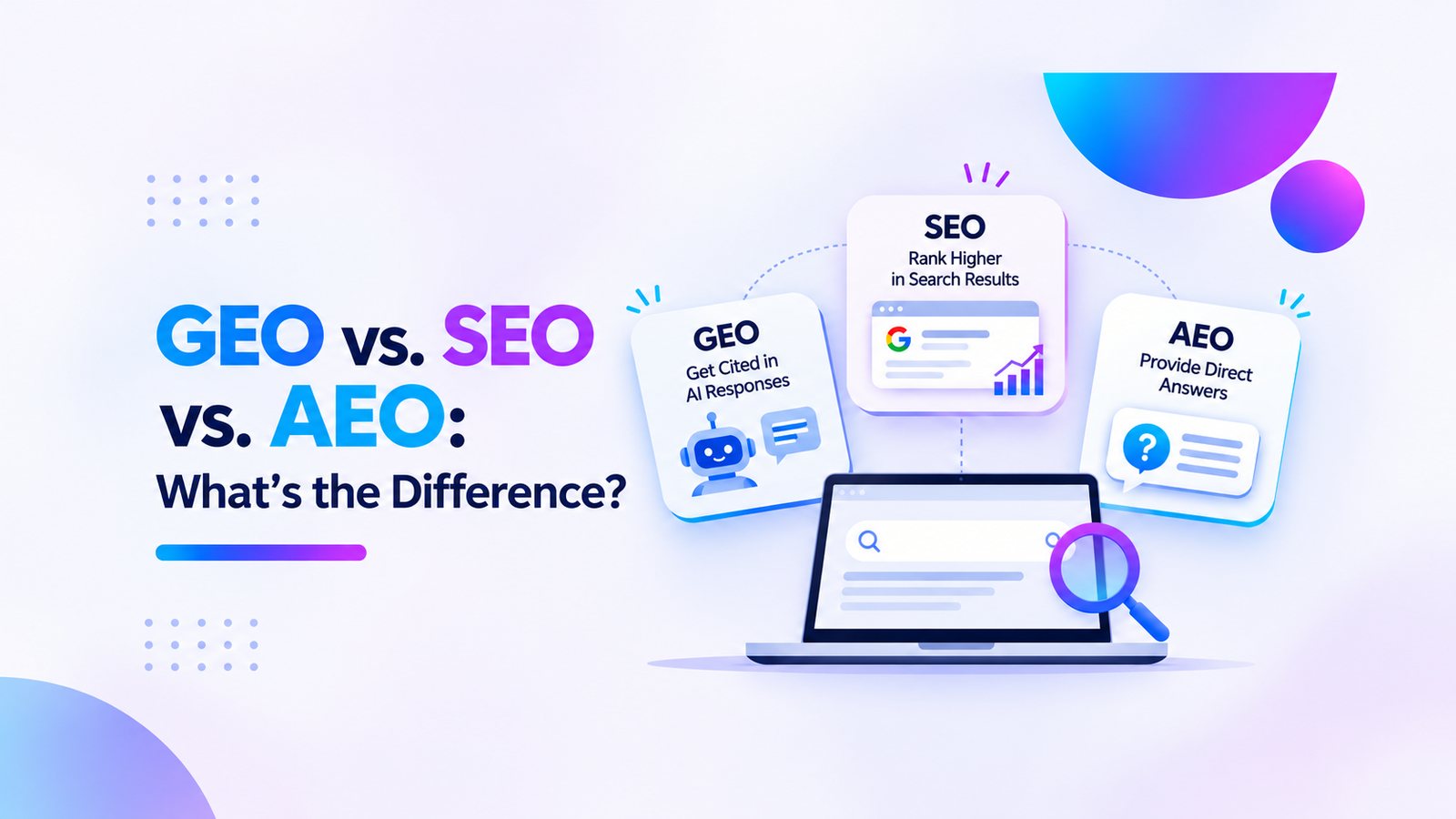
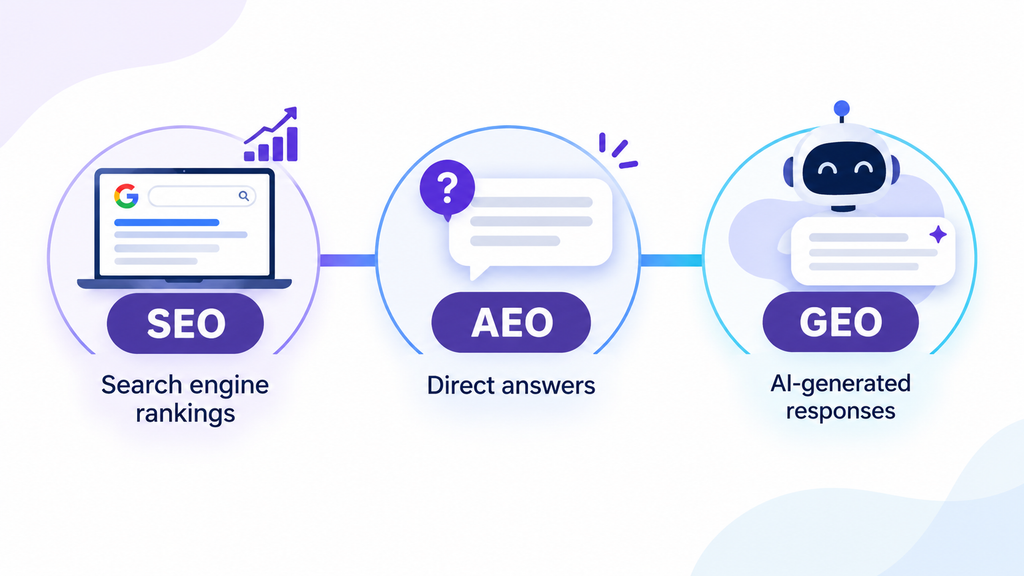
SEO, AEO, and GEO help people discover businesses and their content online, but each focuses on a different search experience. SEO targets traditional search results, AEO focuses on providing direct answers, and GEO aims to improve brand visibility in AI-generated responses.
These approaches overlap, and their definitions can vary. In this guide, we’ll explain their main differences and how they work together.
It’s worth noting that AEO and GEO are relatively new terms, and their definitions can overlap depending on how they are used. In this guide, AEO refers to making content useful for direct answers, while GEO focuses on improving a brand’s visibility in responses generated by generative AI platforms.
Lets’s understand GEO vs SEO vs AEO
What Is Search Engine Optimization (SEO)?
Search Engine Optimization (SEO) is the process of improving a website’s visibility in organic search results. It helps search engines understand website content and connect it with people searching for relevant information.
SEO includes keyword research, content optimization, improving website structure, building relevant links, and making sure search engines can crawl and index web pages.
For example, if someone searches for “best project management software,” SEO helps a relevant website appear in the search results for that query. The goal is not simply to rank higher but to reach people who are genuinely interested in the information, products, or services a business offers.
What Is Answer Engine Optimization (AEO)?
Answer Engine Optimization (AEO) focuses on making website content easy for search engines and answer platforms to understand and use when responding to users’ questions. Its goal is to help content provide clear, relevant answers rather than focusing only on page rankings.
For example, when someone asks, “What is the best way to improve website traffic?”, an answer engine may use a clear explanation from a relevant website in a featured snippet or AI-generated response.
To support AEO, businesses should provide direct answers, use clear headings, organize information logically, and support their content with accurate and reliable information. This makes it easier for answer engines to understand the topic and identify relevant information.
What Is Generative Engine Optimization (GEO)?
Generative Engine Optimization (GEO) focuses on improving a brand’s visibility in AI-generated responses. It aims to increase the chances that AI platforms such as ChatGPT and Perplexity will mention or cite a website, brand, or its content when answering relevant questions.
For example, when someone asks an AI platform to recommend reliable email marketing tools, GEO helps relevant businesses improve their chances of being included in the response.
This involves more than adding keywords to a web page. Businesses need to publish accurate and useful content, demonstrate subject knowledge, build a credible online presence, and make important information easy to understand and reference.
GEO is closely related to AEO, and the two terms are sometimes used interchangeably. However, GEO is commonly used to describe visibility across generative AI platforms, while AEO often has a broader focus on direct answers across answer engines and search features.
GEO vs SEO vs AEO: Key Differences
SEO, AEO, and GEO help businesses improve their online visibility, but they work in different ways. Each approach focuses on how content is discovered and presented to users. SEO helps web pages appear in traditional search results, AEO makes information easier to find as direct answers, and GEO focuses on getting a brand or its content recognized in AI-generated responses.
Although their goals are related, the platforms, content strategies, and ways of measuring success can vary. let’s compare GEO vs SEO vs AEO
| Comparison | SEO | AEO | GEO |
| Primary focus | Search engine rankings | Direct answers to user questions | Visibility in AI-generated responses |
| Main objective | Attract organic website traffic | Make content a useful answer | Increase brand mentions and citations |
| Content approach | Relevant, keyword-focused, valuable content | Clear, structured, question-based content | Informative, credible, and well-supported content |
| Where visibility happens | Google and Bing search results | Featured snippets and answer engines | ChatGPT, Perplexity, and other generative AI platforms |
| Measuring success | Rankings, organic traffic, and clicks | Answer visibility and featured snippets | AI citations, brand mentions, and referral traffic |
Where They Overlap
Despite their differences, these approaches share several important foundations. All benefit from helpful content, relevant information, a well-organized website, and a credible online presence. Strong keyword research, topical coverage, and clear content structure can support visibility across traditional and AI-powered search experiences.
This means businesses do not necessarily need three separate content strategies. A well-planned approach can support SEO, AEO, and GEO together while adapting content to how different platforms discover and present information.
Is Traditional SEO Enough for AI Search Visibility?
With the rise of AI-powered search, many businesses are wondering whether traditional SEO is still enough to keep their websites visible. The good news is that SEO is not becoming irrelevant. Search engines and AI-powered experiences still rely on relevant, accessible, and trustworthy information to help users find answers.
However, the way people discover content is changing. A website may rank well in Google search results, but that does not automatically mean it will appear in an AI-generated response. Businesses need to maintain strong SEO practices while paying attention to how their content answers questions, demonstrates expertise, and provides useful information.
SEO Foundations That Still Matter
Traditional SEO remains an important part of building online visibility, even as AI search continues to develop. Many of the practices that help search engines understand and rank web pages also support their discovery in AI-powered search experiences.
Some important SEO foundations include:
- Keyword research: Understand what your audience searches for and use relevant keywords naturally in your content, titles, headings, and descriptions.
- Helpful content: Publish original, accurate, and informative content that addresses users’ needs instead of simply repeating information available elsewhere.
- Website structure and internal linking: Organize pages logically and connect related content so visitors and search engines can navigate your website easily.
- Technical SEO: Make sure important pages can be crawled and indexed, load properly, and work well across different devices.
- Experience and credibility: Demonstrate knowledge of your subject, support claims with reliable sources, and keep important information accurate and updated.
These practices help create a strong foundation for both traditional search visibility and AI-powered search discovery. Google’s guidance also confirms that its existing SEO best practices remain relevant to AI features such as AI Overviews and AI Mode.
What Requires a Different Approach for AI Search?
Although traditional SEO provides a strong starting point, businesses also need to consider how their content may be understood and used in AI-generated responses. Instead of focusing only on website rankings, the goal is to make information clear, useful, and easy to reference.
Here are a few areas that deserve additional attention:
- Answer specific questions: Cover the questions your audience is likely to ask. Provide clear explanations and direct answers instead of making readers search through lengthy paragraphs.
- Add original insights: Go beyond basic definitions by including practical examples, expert perspectives, comparisons, and useful information that gives readers something new.
- Build brand credibility: Develop a consistent online presence through relevant content, genuine customer experiences, industry contributions, and trustworthy references.
- Make information easy to understand: Use descriptive headings, short paragraphs, lists, and tables where they improve readability. Organize related information in a logical order.
- Maintain content accuracy: Review older articles, update outdated details, and make sure facts and claims are supported by reliable information.
It is also important to understand that there is no guaranteed formula for appearing in AI-generated answers. Google does not require special GEO markup or a separate AI-specific optimization process for its AI search features. Strong SEO fundamentals and genuinely useful content remain the priority.
Ultimately, businesses do not need to abandon traditional SEO to adapt to AI search. They need to build on what already works while creating content that answers real questions, demonstrates credibility, and offers meaningful value to readers.
How to Optimize Content for Search Engines and AI Platforms
Improving visibility across traditional search engines and AI-powered platforms requires more than adding keywords to a blog post. Businesses need content that answers users’ questions, provides reliable information, and is easy for search engines and AI systems to understand. The good news is that many practices used in traditional SEO also support AEO and GEO. The key is to focus on content quality while making a few improvements to how information is presented and organized.
Here are some practical ways to build a content strategy that supports all three approaches:
Understand Search Intent and User Questions
Start by researching what your audience wants to know. Use keyword research to identify relevant search terms, related questions, and topics your potential customers are interested in. Focus on the reason behind each search rather than simply adding popular keywords. This helps you create content that matches users’ needs and provides relevant answers.
Create Helpful and Original Content
Write content that offers real value instead of repeating information already available on other websites. Include useful examples, practical advice, original insights, and reliable information. Make sure your content is accurate and addresses the topic properly. This gives readers a reason to trust your website and return for more information.
Organize Content for Easy Understanding
Use descriptive headings, short paragraphs, bullet points, and comparison tables where appropriate. Answer important questions directly and explain complex ideas in simple language. A clear content structure makes articles easier for visitors to read and helps search systems understand how different sections relate to the topic.
Build Topical Authority and Brand Credibility
Cover related subjects in depth rather than publishing disconnected articles around individual keywords. Create supporting blog posts, connect relevant pages through internal links, and demonstrate knowledge of your industry. Also, maintain accurate business information and build a consistent presence across relevant websites and platforms.
Maintain Website Accessibility and Technical SEO
Even valuable content needs to be accessible. Make sure search engines can crawl and index important pages, check that your robots.txt file isn’t blocking essential content, and ensure your website works well on mobile devices. Use descriptive page titles, relevant meta descriptions, and structured data when appropriate. Your structured data should accurately match the information visible on the page.
Ultimately, optimizing for SEO, AEO, and GEO is not about following separate sets of tricks. It is about creating useful content, building trust, and making information accessible wherever people search. These practices give your website a stronger foundation for visibility across traditional search results and AI-powered experiences.
How to Measure Search and AI Visibility
Creating content for search engines and AI platforms is not enough; businesses also need to track whether their content is reaching the right audience. Measuring search and AI visibility helps identify what is working and where improvements are needed.
Tracking Organic Rankings and Traffic
For traditional SEO, use Google Search Console to monitor keyword rankings, impressions, clicks, and click-through rates (CTR). These metrics show how often your pages appear in Google search results and how many users visit them. Google Analytics 4 (GA4) can provide further insights into organic traffic, visitor engagement, and website performance. Reviewing these metrics regularly helps identify successful pages and content that needs improvement.
Measuring AI Citations, Brand Mentions, and Referral Traffic
AI search visibility requires additional measurements beyond traditional rankings and traffic. Monitor whether platforms such as ChatGPT and Perplexity mention or cite your website when answering relevant questions. Track brand mentions and identify referral visits from AI platforms through Google Analytics 4 (GA4).
You can also use Bing Webmaster Tools’ AI Performance report to review citation activity, cited pages, and grounding queries across supported AI experiences. Google Search Console also provides reporting for search performance, including its AI search features where available. Remember that an AI citation does not necessarily result in a website visit, so measure citations, brand mentions, and referral traffic separately.
Misconceptions About AI Search Optimization
What Businesses Often Get Wrong About AI Search
- GEO is replacing traditional SEO: SEO remains important for organic visibility, while GEO adds a focus on appearing in AI-generated responses.
- AI-generated content guarantees AI visibility: Publishing AI content alone does not guarantee citations or recommendations. Content still needs to be accurate, useful, original, and relevant.
Common Myths About AI Optimization Techniques
- Schema markup guarantees AI citations: Structured data helps search engines understand content, but it does not guarantee AI mentions or citations.
- Keywords no longer matter: Keywords still help search engines understand content. The focus should be on search intent and relevant topics rather than keyword stuffing.
The key takeaway: AI search optimization does not rely on shortcuts. It builds on strong SEO foundations, helpful content, clear structure, and a credible online presence.
Which Search Optimization Strategy Should Your Business Prioritize?
The best search optimization strategy depends on your business goals, target audience, and where your potential customers search for information. Rather than choosing only one approach, businesses should combine SEO, AEO, and GEO to improve visibility across traditional search engines and AI-powered platforms.
Start with SEO: If your website is new or has limited organic visibility, focus on SEO first. Build a strong foundation through keyword research, helpful content, technical optimization, and relevant internal links.
Add AEO: If your audience frequently searches for specific questions, make your content easy to understand and use as a direct answer. Include clear explanations, question-based headings, and useful information.
Expand into GEO: If you want your brand to appear in AI-generated responses, focus on publishing credible, informative content that demonstrates expertise and provides original value.
You do not need to implement everything at once. Start with strong SEO practices, then incorporate AEO and GEO into your existing content strategy as your business grows.
Ultimately, the goal is not just to rank in search results but to make your business discoverable wherever your audience looks for answers.
How an Integrated AI SEO Platform Supports Your Search Visibility Strategy
Managing SEO, AEO, and GEO separately can make content creation time-consuming. An integrated AI SEO platform brings important tasks into one workflow, helping businesses research topics, create optimized content, and maintain a consistent publishing strategy. IntelliWriter combines several of these capabilities to support content optimization and organic search visibility.
Keyword Research and Content Opportunities
A strong search strategy starts with understanding what your audience is looking for. IntelliWriter’s SEO Keyword Research Tool helps identify relevant keywords and content opportunities. You can use these insights to plan articles around user intent, related search terms, and topics that support your website’s subject coverage.
AI Content Creation and SEO Optimization
Once you have selected a topic, IntelliWriter helps you create AI-assisted articles and optimize them for search. You can develop content around relevant keywords, improve its structure, and review important on-page SEO elements. However, reviewing facts, adding original insights, and ensuring that the content genuinely answers readers’ questions remain essential.
Topical Authority and Content Publishing
Building visibility requires more than publishing individual articles. IntelliWriter supports topic clustering and content planning, helping businesses cover related subjects and develop topical authority. Its blog automation and WordPress publishing capabilities can also simplify the process of preparing and publishing content consistently.
By bringing keyword research, AI writing, SEO optimization, and publishing together, IntelliWriter helps reduce manual work while supporting a more organized content strategy.
Frequently Asked Questions
Is GEO Replacing SEO?
No. SEO remains essential for traditional search visibility, while GEO focuses on visibility in AI-generated responses.
Are AEO and GEO the Same Thing?
No. AEO focuses on direct answers, while GEO focuses on brand visibility in generative AI responses. Their meanings can overlap.
Can Traditional SEO Help a Website Appear in AI Search?
Yes. Helpful content, technical SEO, and website credibility can support AI search visibility.
How Can Businesses Improve Their AI Search Visibility?
Publish accurate, useful content, answer relevant questions, demonstrate expertise, and maintain a credible online presence.
Should Businesses Invest in SEO, AEO, and GEO Together?
Yes. Combining all three helps businesses improve visibility across traditional search engines and AI-powered platforms.
Conclusion:
Understanding GEO vs SEO vs AEO helps businesses adapt to the changing search landscape. SEO builds visibility in traditional search results, AEO helps content provide direct answers, and GEO improves the chances of appearing in AI-generated responses.
Rather than focusing on just one approach, combine all three to reach your audience across different search experiences. Start with strong SEO foundations, create helpful and trustworthy content, and optimize it to answer users’ questions.
With IntelliWriter, you can simplify this process through keyword research, AI content creation, SEO optimization, topical authority, and publishing—all within one platform. This helps reduce manual work and build a more organized strategy for long-term search visibility.
Leave a Reply